
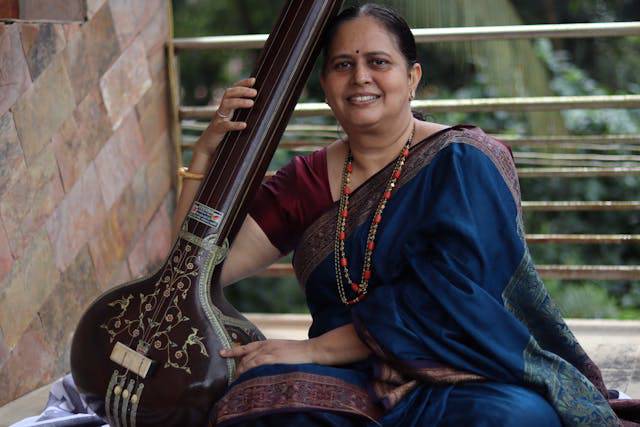

Indian classical music boasts a rich tapestry of vocal techniques and styles that have evolved over centuries. In this post, we take a closer look at modern arrangement singing, focusing on the deep-rooted traditions of Dhrupad and the imaginative flair of Khayal. 🎶
Core Components of Modern Arrangement Singing 🎼
Traditional singing in this genre is built on several fundamental elements:
- Swara: The musical notes that form the melody. 🎵
- Vidur: The supportive or transitional segments. 🔄
- Tenak: Unique phrases that add depth to the performance. ✨
- Pad: The lyrical component conveying emotions and stories. 📜
- Paat: The distinct articulation and delivery of lyrics. 🎤
- Taal: The rhythmic framework that underpins the music. 🥁
Dhrupad: Origins and Characteristics 🎻
Historical Background 🕰️
Dhrupad is one of the oldest forms of Indian classical music, believed to have been developed by Raja Maan Singh Tomar of Gwalior in the 15th century. Ancient texts recount that even Rishi Muni would offer Sanskrit verses in the Dhrupad style to honor the divine. Today, Dhrupad is esteemed as a serious and robust musical form, typically rendered in Hindi, Urdu, or Brajbhasa.
Structure and Rhythm ⏱️
A Dhrupad composition is traditionally divided into four parts:
- Permanent: The stable, foundational section.
- Antara: The part that builds on the opening theme.
- Sanchari: The wandering, exploratory segment.
- Abhoga: The concluding, expressive finale.
Dhrupad utilizes various rhythmic cycles—including chautal, sulfaak, jhampa, tiwraa, brahmatal, and rudrataal—to give the performance its distinctive pulse. Instead of traditional Taano, artists employ techniques like Double, Quardble, or Boltaan for rhythmic embellishment.
The Four Voices of Dhrupad 🎤
Evolution of Vocal Styles
Historically, Dhrupad singers—known as Kalavant—developed four distinct vocal styles, each with its unique character. In Akbar’s court, four celebrated artists emerged, representing these styles:
- Gobarhar-Vaani (Pure Speech): A calm and deliberate style with a slow tempo, often considered the heart of the music. 💖
- Khandhaar-Vaani: A deep and expressive mode enriched by subtle vocal nuances. 🌌
- Daagur-Vaani: Marked by simplicity and elegance, offering a smooth delivery. 🎙️
- Nohar-Vaani: Recognized by its distinctive skipping of notes, creating an unexpected dynamic. ⚡
Each of these voices was given a unique role—Gobarhar as the regal tone, Dagur as the ministerial voice, and Nohar as the servant’s timbre—highlighting their importance in conveying musical emotion.
Khayal: The Evolution of Imaginative Expression 🎹
The Concept Behind Khayal
The word Khyaal means “thought” or “imagination” in Persian, and it aptly describes this innovative form of singing. Unlike the structured solemnity of Dhrupad, Khayal allows for greater creativity and freedom, following the raga while offering room for spontaneous improvisation.
Performance Styles in Khayal
- Bade Khayal: Characterized by a slower tempo (vilambit) and a more elaborate introduction. 🐢
- Chhote Khayal: Performed in a brisk tempo (drut), offering dynamic contrasts that energize the performance. ⚡
Singers often begin with a detailed Bade Khayal to set the mood, then transition to a faster Chhote Khayal, showcasing both technical skill and creative spontaneity.
Conclusion 🎶
The journey from the disciplined depth of Dhrupad to the imaginative flair of Khayal reflects the vibrant evolution of Indian classical music. While Dhrupad continues to be revered for its traditional gravitas, Khayal brings a refreshing sense of creativity to modern arrangements. Both styles, with their unique characteristics, remain essential to preserving the legacy and soulful expression of Indian music.


0 Comments