
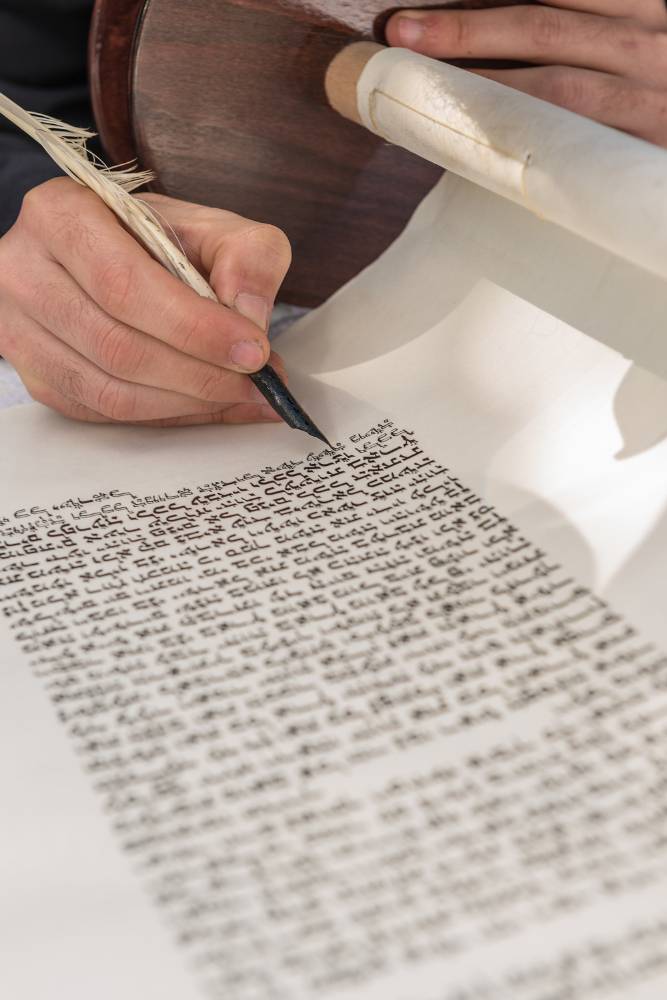

Indian classical music is steeped in centuries-old traditions and nuanced vocal techniques. This post explores a range of ancient definitions—from the foundational Swasthana to complex tone variations—shedding light on how these elements shape the art of vocal expression.
Swasthana
In ancient times, a special rule of reciting the alaap was known as Swasthana. Here, the entire raga relied on a stable note (the “swar”)—with the fourth note, known as drivyardh, being called dvigun. The note that falls between the dvigun and drivyardh is termed the ardhstith swar. Traditionally, the singer was required to keep the alaap under the influence of the dravyaardha swara.
Rupakalap
Rupakalap refers to an ancient system of performing the alaap in a wordless manner. While the singer would demonstrate the raga to the audience without spoken commentary, this style emphasized an automatic, direct arrangement of notes. Rupakalap, devoid of words or strict rhythm, was considered the next evolutionary step after the conventional raga alaap.
Aalapti-Gaan
As the evolution of the raga performance continued from Ragaalaap and Rupakalap, the concept of Aalapti-Gaan emerged. This form involves presenting the complete raga through the dynamic process of appearing and disappearing, giving the audience a full impression of the raga’s essence.
Appearance-Disappearance
While expanding a raga, a singer might intermittently hide the main raga by interspersing fragments of similar ragas. This technique is known as Tirobhav. When the primary raga is reestablished after these fleeting interludes, the process is called Avirbhav (or, when especially skillful, Banavivabhavi). For instance, if a singer performing Vasant Raga briefly hints at Paraj Raga by using Nishad before fully returning to Vasant, that transitional effect is termed Tirobhav.
Permanent
Small groups or clusters of vowels that clarify the raga’s identity are called permanent groups. For example, certain combinations like "sa ni dha ni sa, ma, gam, gu re sa" might not belong solely to Bageshree but still serve to reinforce the raga’s structure. These subtle vocal clusters are essential for clearly establishing the raga's character.
Mouth Movement
The act of singing or playing instruments using various articulatory techniques is known as Mukhchalan (mouth movement). This term underscores the physical dynamics involved in producing nuanced musical sounds.
Occlusal (Akshiptika)
Ancient scholars referred to compositions prepared with the interplay of voice, words, and rhythm as Akshiptika. This category includes composed songs such as Khayal, Dhrupad, and Dhamar.
Non-Binding Song
Compositions that adhere to swara-taal rules fall under Nibandha Gaan, which can be categorized into management, object, and metaphor types. Their constituent parts—often called "metal"—include segments like the excerpt, Dhruv, Melapak, Antara, and Occupancy. In contrast, songs bound to notes without strict rhythmic structure (like Ragaalaap, Roopakaal, or Alaptigan) are known as unbounded songs.
Bidari
In genres such as Gota and Anapa, smaller components are termed Bidari. The elements like Udgrah, Dhruva, Melapak, Antara, and Abhog (discussed under Nibandha Gaan) fall under the category of Satra Vidari. When the final vowels in this sequence appear, they are referred to as Ho Nyas or Apanyas.
Alpatva
The concept of Alpatva denotes deficiency or sparseness. When a note in a raga is used minimally—either due to conflict or habitual omission—it is said to exhibit alpatva. This selective omission, sometimes observed in controversial contexts, serves to highlight the note’s importance by its absence.
Abundance
Conversely, abundance is demonstrated when a note is consistently included throughout a raga’s ascent or descent without being overly emphasized. For example, in certain ragas like Kalinga, the middle note is neither omitted nor excessively prolonged; its presence is subtly asserted by simply crossing it.
Grasp
A specific grouping of notes that distinctly identifies a raga is called its Pakar (grasp). For instance, the unique grip of Raga Yaman might be characterized by a pattern such as “Ni, Reg, Re, Sa, Parmag, Re, Sa.”
Turn
A turn is the technique of extending a single vowel sound into two, three, or more connected sounds, either preceding or following the original note.
Meed
When singing or playing continuously without any perceptible break, the style is called Meed. For example, a smooth transition from “Pa Dha Ni Sa” is executed in a way that the intermediate notes merge seamlessly, maintaining an unbroken vocal line.
Yarn
The term Yarn distinguishes between techniques used on different instruments. While Meed is typically associated with vocal renditions or instruments like the sitar, similar continuous techniques used on instruments such as the sarangi or violin are referred to by another term. Essentially, both methods serve to create a sustained, flowing sound.
Agitation
The term agitation refers to the movement or vibration of vowels. The degree of this vibration is used to quantify the movement within a performance.
Gamak
When the natural vibration of a vowel is deliberately enhanced through controlled movement, the resulting embellishment is known as Gamak (e.g., “Sa Aa Aa Re Aa Aag Aaaa”). This adds expressive depth to the performance.
Particles
During pronunciation, if a vowel is made to lightly “touch” an adjacent note (such as Nishad approaching Sa), this subtle contact is called a particle effect. It is sometimes referred to as the “Kan” of the note.
Tone (Taan) and Its Variations
The collective group of notes that expands a raga is termed a Taan. Over time, various types of taans have been identified:
- Pure Tone: A sequence where the notes follow a straight, unaltered ascent and descent (also called flat tone). Example: “Sa Re Ga Ma Pa Dha Ni Sa.”
- Code Tone: A taan with a zigzag or unclear sequence, sometimes described as “Kuta Taan.”
- Alloy Tone: A confluence of pure and kuttaan styles, known as Mishra Taan (e.g., “Padha ni sang ma padha dha pa ma paga ma resa”).
- Khatke Ki Taan: Achieved by forcefully pushing the notes.
- Tone of Shock: A taan that suddenly accelerates—often doubling the pace and then making a quick, unexpected turn—termed Jhatke Ki Taan.
- Speaking Tone: A variant where the sequence appears crooked or non-linear, similar to Kut Taan.
- Acharaka Tone: In which every two notes are spoken together in rapid succession.
- Sarok Tone: Where four notes are articulated together in a set sequence.
- Fighting Tone: A complex blend of horizontal rhythms, often showcasing a “battle” between the singer and accompanying instruments.
- Flat Tone: Rapid, continuous movement through notes without deviation.
- Gitkari Tone: Executed by quickly placing two notes in succession.
- Jaw Tone: Produced by generating sound from the inner throat with the aid of the jaw, a technique mastered only by accomplished singers.
- Halak Tone: Involves moving the tongue in and out in a controlled manner.
- Palat Tone: Involves a descending and returning motion in the taan (also known as Palta-Tan).
- Bol-Taan (Speaking Tone): A style where, in addition to the taan, lyrics are interwoven in varying rhythmic speeds (slow, medium, fast, or messenger pace).
Aalap
When a singer initiates a performance by gradually spreading out the notes of a raga, it is called Aalap or vocal expansion. For example, the alaap of Bilawal might begin with elongated sounds such as “-ayen” before unfolding the full raga.
Edge (Badhaat)
The term Edge (or Badhaat) describes the process where a singer modifies the rhythm by extending certain note groups—transitioning from smaller clusters to larger phrases. This is often achieved by incorporating techniques like Bol-Taan and Gamak to gradually build intensity.
Conclusion 🎵
These ancient definitions and techniques form the bedrock of Indian classical vocal art. From the foundational Swasthana to the nuanced variations of tone and the expansive Aalap, each element contributes to a rich tapestry of musical expression that continues to inspire and educate.


0 Comments