
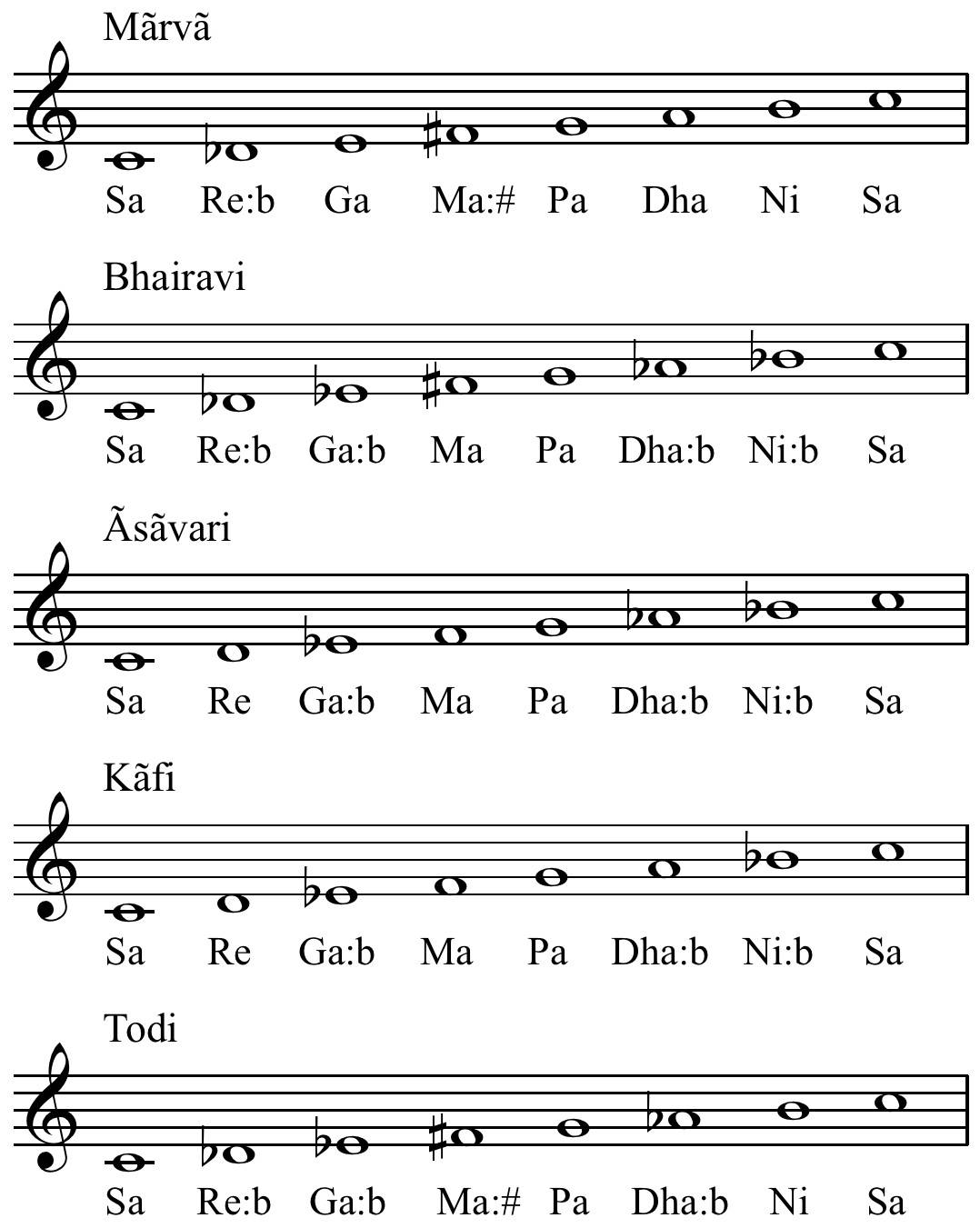

This guide provides detailed descriptions of several ragas from the Indian classical music tradition. Here you will find in-depth information about each raga’s form, notation (including ascent–descent patterns), and performance timings. The following sections cover various ragas such as GAURI (with its Bhairav Thaat and East Thaat variants), CHANDRA KANT, CHANDRA KAUS, CHARUKESHI, CHANDNI KEDAR, JALDHAR KEDAR, JAYJAYWANTI, JANTASHREE/JAITASHREE, JAIT/JET, JAIT KALYAN, JOG, and JOGIA.
GAURI (Bhairav Thaat)
This is a type of Gauri raga derived from Bhairav Thaat. In its ascent, Gandhar and Dhauvat are rendered as “Jeet,” and the descent is complete (Audav-complete). The vaadi swara is Rishab and the sambadi is Pancham. This raga is considered a Sayangeya raga and—at times—a sharp Madhyam is also used. In this type of Gauri, there is a mixture of ‘Kaligada’ and ‘Shrirag’. The Nishad of the Mandra Saptak is rendered in a special manner, which distinguishes it from other types of Gauri. Both Rishab and Dhauvat have a soft quality.
Structural Notation
| मुख्य अंग | सा रे१ सा ,नि सा ग रे१; म ग रे१ सा रे१ ,नि सा |
|---|---|
| आरोह - अवरोह | सा रे१ ,नि सा ; सा रे१ ग म प ध१ प ; प ध१ नि सा' - सा' नि ध१ प म ग ; रे१ ग म ग रे१ ; सा रे१ ,नि सा ; ,ध१ ,नि ,ध१ सा ,नि सा |
Example pattern: Sa Re Ma Pa Ni Samn | Samn Ni Dha Pa Ma Ga Re Sa
GAURI (East Thaat)
This variant of Gauri originates from Purvi Thaat and is a complete jati raga in which Rishab and Dhivat are rendered softly, and both are treated as Madhyam. Here, Rishab is the vaadi and Pancham is the samvaadi. Gandhar and Dhauvat are prohibited in the aroha. The singing time is Sandhyakaal. A portion of 'B' raga is also utilized, and some performers introduce a slight Dhauvat, differentiating it from ‘Shri’ raga.
Structural Notation
| विश्रांति स्थान | सा ग प - सा' प ग |
|---|---|
| मुख्य अंग | ,नि रे१ ग ; म् ग म ग ; म् ध१ प ; नि ध१ प ; ग म् ध१ ; म् ग म ग |
| आरोह - अवरोह | ,नि रे१ ग म् प ध१ नि सा' - सा' नि ध१ प ; म् ग म ग रे१ सा ; ,नि रे१ सा |
Example pattern: Sa Re Pa Ni Sanm | Sanm Ni Dha Pa Ma Ga Re Sa
CHANDRA KANT
An unknown raga originating from Chandra Kant Kalyan Thaat, this raga features Gandhar as the vaadi and Dhovat as the samvaadi. Since Dhovat is played in the ascent, the raga is classified as Audav-complete with a medium-sharp quality.
Structural Notation
| विश्रांति स्थान | सा; म; नि; - सा'; नि; म; |
|---|---|
| मुख्य अंग | सा ग१ म ग१ सा ,नि ; ,नि सा ; ग१ म ध१ नि सा' ; नि ध१ सा' ; नि ध१ म ग१ म ग१ सा ,नि सा |
| आरोह - अवरोह | सा ग१ म ध१ नि सा' - सा' नि ध१ म ग१ म ग१ सा ,नि सा |
Example: Sarega, Maga, Pa, Ni, Dha, Ni, Sanima, Sanima, Ni, Dha, Pa, Ma, Ga, Re, Sa
CHANDRA KAUS
This is an Audav type raga of Kafi Thaat in which Gandhar and Nishad sound softly. Rishab and Pancham are pronounced strongly. Madhyam serves as the vaadi and Shadja as the samvaadi. Its ascent and descent follow a pattern such as: Sa Ga Ma Dha Ni Sa. Sa Nidhama Ga Maga Sa.
Structural Notation
| विश्रांति स्थान | सा; म; नि; - सा'; नि; म; |
|---|---|
| मुख्य अंग | सा ग१ म ग१ सा ,नि ; ,नि सा ; ग१ म ध१ नि सा' ; नि ध१ सा' ; नि ध१ म ग१ म ग१ सा ,नि सा |
| आरोह - अवरोह | सा ग१ म ध१ नि सा' - सा' नि ध१ म ग१ म ग१ सा ,नि सा |
CHARUKESHI
A raga of Carnatic origin derived from Charukeshi Mel, this raga features soft Dhauvat and Nishad. Pancham is the vaadi and Shadja the samvaadi; its jati is complete and it is traditionally performed at midnight.
Structural Notation
| विश्रांति स्थान | रे; ग; म; प; ध१; |
|---|---|
| मुख्य अंग | ,ध१ ,नि१ सा रे ग म ग रे ; रे ग म ध१ प ; रे ग म रे सा |
| आरोह - अवरोह | सा रे ग म प ध१ नि१ सा' - सा' नि१ ध१ प म ग रे सा ,ध१ ,नि१ सा |
CHANDNI KEDAR
A variant of the popular Raga Kedar, Chandni Kedar employs pure Madhyam and Sheya notes, with Gandhar rendered as Jeet—resulting in a Shadav jati. The badi is Madhyam and the sambadi is Shadja, and its performance time is at night. By eliminating Kamal Nishad from the original Kedar and using a sharper Madhyam, the unique form “Chandni Kedar Samko” is achieved.
Structural Notation
| विश्रांति स्थान | सा; म; प; - सा'; प; म; |
|---|---|
| मुख्य अंग | सा म ; म प ; म् प ध प म ; सा रे सा ; म् प ध प म् प सा' ; सा' रे' सा' सा' ध ध प |
| आरोह - अवरोह | सा म प ध नि सा' - सा' नि ध प ; म् प ध प ; म म रे सा |
JALDHAR KEDAR
Originating from Bilaval Thaat, Jaladhar Kedar is a variation of Kedar in which Gandhar and Nishad are prohibited, giving it an Odav classification. This raga combines elements of Kedar and Malhar; its vaadi is Madhyam and sambadi is Padj. The balance between Re-Pa and Ma-Re in the descent is essential.
Structural Notation
| विश्रांति स्थान | म; सा; |
|---|---|
| मुख्य अंग | सा रे सा म ; म रे प म ; म प ध सा' ; रे' सा' ध प म ; प म रे सा |
| आरोह - अवरोह | सा रे सा म ; म रे प म ; म प ध सा' - सा' ध प म ; प म रे सा |
JAYJAYWANTI
A raga of Khamaj Thaat, Jayjaywanti features pure Gandhar, both Nishads, and the remaining notes. The raga is complete with Rishab as the dominant note and Pancham as the sambadi. In the ascent, pure Nishad is used; in the ending of the Alaap or Taan, soft Gandhar is interposed. The raga spans lower to middle octaves.
Structural Notation
| विश्रांति स्थान | सा रे प नि - सा' प रे |
|---|---|
| मुख्य अंग | ,ध ,नि१ रे s ; रे ग१ रे सा ; ,नि सा ; रे म प नि ; नि१ ध प ; म प म ग ; रे सा |
| आरोह - अवरोह | सा ,ध ,नि१ रे s ; रे ग१ रे सा ; ग प म ग रे ; रे म प नि सा' - सा' नि१ ध प म ग रे ग१ रे सा ; ,नि सा ,ध ,नि१ रे सा |
JANTASHREE / JAITASHREE
A raga of the Audav-Sampoorna genre originating from Purvi Thaat, Jantashree (or Jaitashree) features strong Rishab and Dhauvat in the ascent. Gandhar is the vaadi and Nishad the sambadi (though some consider Pancham as vaadi and Shadja as sambadi). Its performance time is in the evening.
Example Form: Saagarma Pa Nitam. Sanidhup Maang Dress
JAIT / JET
This raga belongs to the Audav genre from Marwa Thaat, with Pancham as Badi and Shadja as Sambadi. Both Rishab are used along with Madhyam and Nishad in the ascent and descent. Two or three variations are popular—one in which a sharp Madhyam is used briefly and another where both Madhyam and Dhauvat are emphasized.
Structural Notation
| विश्रांति स्थान | सा; ग; प; |
|---|---|
| मुख्य अंग | प ध प सा' ; सा' प ; प ध ग प ; प ग रे१ सा |
| आरोह - अवरोह | सा रे१ ग प ध प सा' - सा' प ध प , प ध ग प , प ग रे१ सा |
JAIT KALYAN
Derived from Kalyan Thaat, Jait Kalyan employs Madhyam and Nishad with a distinct emphasis, rendering it Audav-Audav. The time is the first quarter of the night, with Pancham as the vaadi and Shadja as the nava sambadi. Its distinctive Ga-Pa association in the ascent and colorful descending phrases set it apart.
Structural Notation
| विश्रांति स्थान | सा; ग; प; |
|---|---|
| मुख्य अंग | प ध प सा' ; सा' प ; प ध ग प ; प ग रे१ सा |
| आरोह - अवरोह | सा रे१ ग प ध प सा' - सा' प ध प , प ध ग प , प ग रे१ सा |
Example pattern: Path Sarasan Dha Pa Ga Re Sa
JOG
A raga of Kafi Thaat, Jog has a distinct character where Gandhar is prominent and Nishad is rendered softly; Rishab and Kshetra are not used. Its caste is Audav. In the ascent, pure Gandhar is used, while in the descent, a bol (emphatic) Gandhar is employed.
Structural Notation
| विश्रांति स्थान | ग; म; प; - प; म; ग; |
|---|---|
| मुख्य अंग | ग म प नि१ प ; प नि१ प म ग म ; ग म ग१ सा |
| आरोह - अवरोह | सा ग म प नि१ सा' - सा' नि१ प म ग१ सा; ,नि१ सा |
JOGIA
A raga of Bhairav Thaat, Jogia features pure Rishab, Dhaivat, and other notes. In the ascent, Gandhar and Nishad are rendered, while in the descent, only Gandhar is played. This results in an Audav-Padav classification. The vaadi is Madhyam and the sambadi is Padj. Its performance time is the first quarter of the day. Keeping the Madhyam free and occasionally using Komal Nishad in the descent makes the raga immediately clear.
Structural Notation
| विश्रांति स्थान | सा; म; प; ध१; - सा'; ध१; म; रे१; |
|---|---|
| मुख्य अंग | रे१ म म ; म प ध१ ; प ध१ नि ध१ प ; प ध१ म रे१ सा |
| आरोह - अवरोह | सा रे१ म प ध१ सा' - सा' नि ध१ प ; म म रे१ सा |
Conclusion 🎵
This comprehensive collection of raga descriptions provides an in-depth look into the structural intricacies and unique characteristics of each raga. Whether you are a student or a seasoned musician, these detailed forms, notation patterns, and performance insights serve as a valuable resource in understanding and appreciating the rich tradition of Indian classical music.


0 Comments