

Description of 145 Ragas (From First Year to Eighth Year) 🎵
List of Ragas
| Column 1 | Column 2 | Column 3 |
|---|---|---|
| 1. To Insist | 49. Alhaiya Bilawal | 98. Ahir Bhairav |
| 2. Aarbhi Or Aarbhato | 50. Asawari | 99. Gunkari Or Gunabhi |
| 3. Gujari Or Gurjari Todi | 51. Jait Or Jet | 100. Jog |
| 4. Jail Welfare | 52. Khamaji Durga | 101. Bambavati |
| 5. Gandhara | 53. Occupant | 102. Anand Bhairav |
| 6. Grah | 54. Gunakali | 103. Jogia |
| 7. Jogkos | 55. Teenager | 104. Tilakkamod |
| 8. Tilang | 56. Break | 105. Courtier |
| 9. Darbari Kanha | 57. Devagiri Bilawal | 106. Occupier Canada |
| 10. Kalavati | 58. Lust | 107. Enough |
| 11. Coffee Canada | 59. Kaliga | 109. Kirvani |
| 12. Kukubh | 60. Kedar | 110. Gorakh Kalyan |
| 13. Gaur Malhar | 61. Gaur Sarang | 111. Gauri (Bhairav Baat) |
| 14. Gauri (Eastern Baat) | 62. Chandrakant | 112. Durga |
| 15. Devgandhar | 63. Moon Cones | 113. Charukeshi |
| 16. Komal Rishabh | 64. Chandni Kedar | 114. Countryman Asawari |
| 17. Country | 65. Shadow Nut | 115. Desi |
| 18. Corpus Luteum | 66. Kaushik Kandha | 116. Jayant Malhar Or Which One |
| 19. Jaladhar Kedar | 67. Ghani | 117. Nand |
| 20. Jayjaywanti | 68. Khat | 118. Khamaj |
| 21. Jaitshree Or Jantashree | 69. Nat Bilawal | 119. Nat Bihag |
| 22. Bhatiyar Or Bhatihar | 70. Rageshree | 120. Nat Mallar |
| 23. Nayaki Kanada | 71. Bhom | 121. Narayani |
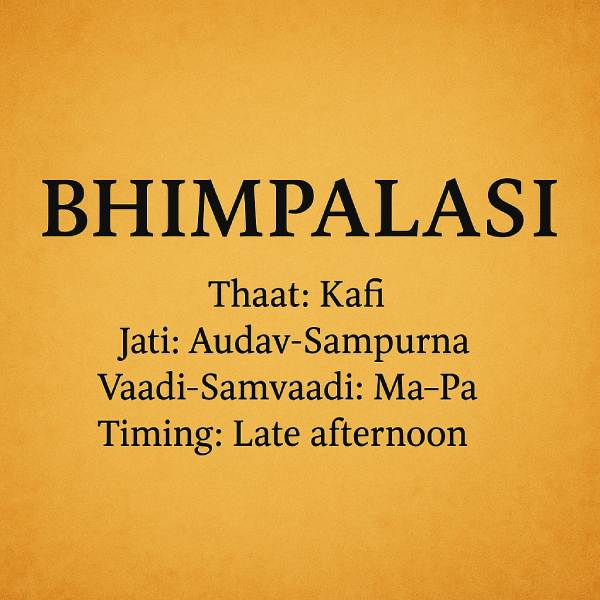
| 24. Bhim Palasi | 72. Patdeep | 122. Bhupal Broke |
| 25. Patmanjari | 73. Bhupaali | 123. Pancham |
| 26. Bhairav | 74. Ramkali | 124. Ramdasi Malla |
| 27. Reva | 75. Lalit | 125. Lalit Pancham |
| 28. Lalita Gauri | 76. Purge | 126. Hill |
| 29. Polu | 77. Pradeepki Or Patdeepki | 127. Bhairav Bahar |
| 30. Bhairavi | 78. Shankara | 128. Vibhas (Bhairav Baat) |
| 31. Madhumad Sarang | 79. Shyam Kalyan | 129. Madhuvanti |
| 32. Shahana | 80. Puriya | 130. Mallar Or Malhar |
| 33. Pure Sarang | 81. Puriya Dhanashree | 131. Maluhakedar |
| 34. Shukla Bilawal | 82. Eastern | 132. Kill |
| 35. Net Welfare | 83. Welfare Or Puriya Kalyan | 133. Maru Bihag |
| 36. Shivmat Bhairav | 84. Vrindavani Sarang | 134. Malganji |
| 37. Malshree | 85. Head Curtain | 135. Furnishings |
| 38. Barwa | 86. Maligaura | 136. Spring |
| 39. Malkosh | 87. Sidura | 137. Sugharai |
| 40. Spring Spring | 89. Miyan Malhar | 138. Sur Mallar |
| 41. Spring | 90. Miyan's Sarong | 139. Drought |
| 42. Bageshree | 91. Multani | 140. Sohni |
| 43. Broke Bilaskhani | 92. Cloud | 141. Mister |
| 44. Bilawal | 93. Megh Mallar | 142. Hanskankno |
| 45. Bihag | 94. Den | 143. Swan Sound |
| 46. Bihagada | 95. Yemen | 144. Hameer |
| 47. Bengal Bhairav | 96. Yemen Welfare | 145. Hidol |
| 48. Ravenous | 97. Yemeni Bilawal | 146. Hemant To Insist Music |
Detailed Raga Descriptions
Raga of Asavari Thaat
In this raga, Dharvat is rendered as a Komal note and both Nishads are employed. In the ascent, Gandhara is treated with a special nuance (Bjit), and in the descent, Chaivat is maintained—classifying the raga as Padav-Padav. The Vaadi swara is the pad of the octave, while the Sambadi features a curved Gandhara.
Form: Sanidha, Nisama, Dha Ni Pa, Mapa Gamaresa.
Raga Alhaiya Bilawal
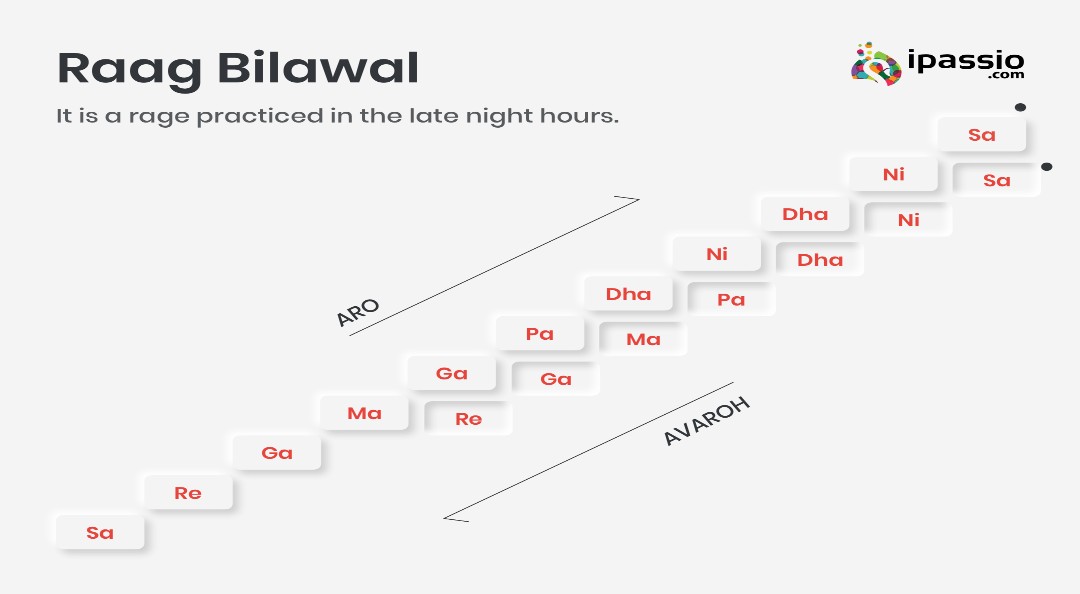
Derived from the Bilawal system, this raga has a medium weight in its mount (Padav-complete) with Kshetrat Vadi and Gandhara Sambadi, forming an Uttaranga (descending) Pradhan Sama. Although it uses the voice of 'Bilawal', the incorporation of Jalla of Komal Nishad in the ascent distinguishes it—thus the name 'Alhaiya Bilawal'.
Form: Ascent and descent include sequences such as “Sare Gapa, Gani Nisan” and “Sa Ni, Dhanidhap, Maga Resa.”
Raga Ahir Bhairav
Belonging to the Bhairav Thaat, Raga Ahir Bhairav fuses elements of Bhairav in the anterior part with Kaafi in the upper part. It features a medium plaintive tone with a well-balanced Sambadi. Ideal for morning performances, its relaxed middle section is particularly notable.
Form: Example patterns include “Saare Gama, Padha, Nisaan” followed by “Sa Ni Dhaps, Garesa.”
Raga Anand Bhairav
A raga of Bhairav Thaat, Anand Bhairav is noted for its intense dhaivat. It combines aspects of Bhairav (Purvanga) with Bilawal (Uttaranga). Here, the Vaadi is Madhyam and the Sambadi has a smooth, pudding-like quality. It is traditionally performed in the early morning.
Form: Typical sequences include “Saare, Gamapadhanisaan; Sa Ni Dhapama, Garesa.”
Raga Aarbhi (Aarbati)
Believed to originate from the Bilawal Thaat, Raga Aarbhi (or Aarbhati) features pure-sounding notes with Gandhar and Nishad present in the ascent and a complete descent. Classified as Audava-complete, its plaintive tone emphasizes Rishabh with a Sambadi of Dhaivat. Its performance time is in the latter half of the night.
Form: Commonly expressed as “Re, Ma, Pa Dha, Dha Ni, Pa Dha Ma, Pa, Ma Ga Re, Sa.”
Raga Asawari
A shelter raga of Asavari Thaat, Asawari employs soft Gandhar, Dhivat, and Nishad while the remaining notes are rendered purely. Notably, Gandhara and Nishad are omitted in the ascent (rendering it Audava-complete) while a soft Rishabh appears in the descent. It is typically performed in the second half of the day.
Form: Typical patterns include “Sa, Re, Ma, Pa, Dha, Sa” with modifications in the descent.
Raga Occupier Canada (Aabhoghi Kanada)
Also known as Aabhoghi Kanada, this raga is a Mal raga from the Carnatic system that has become popular in North India. It features a distinctive 'Kanada' section indicated by a soft (Komal) Gandhar in the descent. The raga employs pure Rishabh and Dhauvat, with Gandhar rendered softly.
Form: The ascent and descent include sequences that highlight the Kanada element.
Raga Enough & Raga Enough Canada
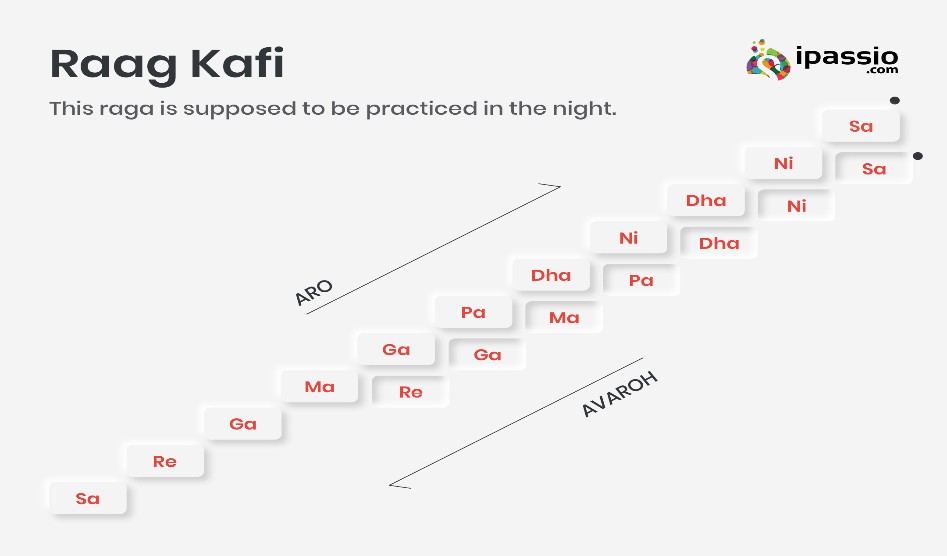
Derived from Kaafi Thaat, these ragas emphasize a soft Ga-Ni combination with the remaining notes pure. In Raga Enough, the Vaadi is Pancham and the Sambadi is Shadj, with pure Gandhara and Nishad reinforcing the descent. Raga Enough Canada blends elements of various Kanada ragas, characterized by consistent Nipa notes and a distinctive Vak Gandhara in the descent.
Form: Both ragas feature structured ascending and descending patterns that highlight these tonal qualities.
Raga Kalavati
A newly created raga from the Carnatic system, Kalavati features pure Rishabh, Gandhar, and Dhivat with a soft performance style. Classified as Shadav (medium weight), its Vaadi is Rishabh and its Sambadi is Panchabha. It is typically performed at night.
Form: Common patterns include an ascent like “Sa, Re, Ga, Pa, Gha, Ni” with a complementary descent.
Raga Kamod
Belonging to Kalyan Thaat, Raga Kamod uses both medium notes in its ascent—with a sharp medium occurring only there. Its Vaadi is Pancham and the Sambadi is Rishabh. The raga transitions from Rishabh to Pancham, with the descent marked by a beautifully curved Gandhara. Singing time is during the first hour of the night.
Form: Notable sequences include “Re, Pa, Ma Pa Dha Pa, Ga Ma Pa, Ga Ma Re, Sa.”
Raga Kaligada
A raga of Bhairav Thaat, Kaligada is characterized by pure Rishabh and Kamal, with the remaining notes rendered purely. In this raga, Rishabh and Dhauvat remain unagitated (unlike in Bhairav), while Pancham serves as the Vaadi and Shadj as the Sambadi. Repeated emphasis on Pancham and Nishaad in the descent distinguishes it from standard Bhairav.
Form: Typically structured with an ascending order of “Sa, Re, Ga, Ma, Pa, Dha, Ni, Sa” along with specific variations in the descent.
Raga Corvani
Derived from the Kirvani Mela of the Carnatic system, Raga Corvani is marked by soft Gandhar and Dhauvat. With Shadja as the Vaadi and Pancham as the Sambadi, this raga is considered complete and is versatile with regard to performance time.
Form: Standard patterns such as “Sa, Re, Ga, Ma, Pa, Dha, Ni, Sa” are followed, with nuanced ornamentation.
Raga Keerwani
Based on Bilawal Thaat, Raga Keerwani is typically performed in the morning. It possesses a medium plaintive tone with graceful interplay between the Nishads, resulting in a beautifully structured descent. Emphasis on the harmonies between Sa-Pa and Sa-Ma is significant.
Form: Its ascent and descent include sequences that bring out these vocal nuances.
Raga Cucurbit
Performed in the morning, Raga Cucurbit features a medium badi swara and Shadja as the sambadi. Similar in structure to other Bilawal-based ragas, it emphasizes smooth transitions and a pleasing tonal structure in the descent.
Form: The structure mirrors that of related ragas, with an emphasis on refined vowel transitions.

Conclusion 🎵
This extensive guide to 145 (or 146) ragas offers a comprehensive look into the rich and diverse world of Indian classical music. From a tabular list of raga names to detailed descriptions of selected ragas, these insights provide an invaluable resource for students and enthusiasts alike.


0 Comments